by Teresa Murray for Backline Live
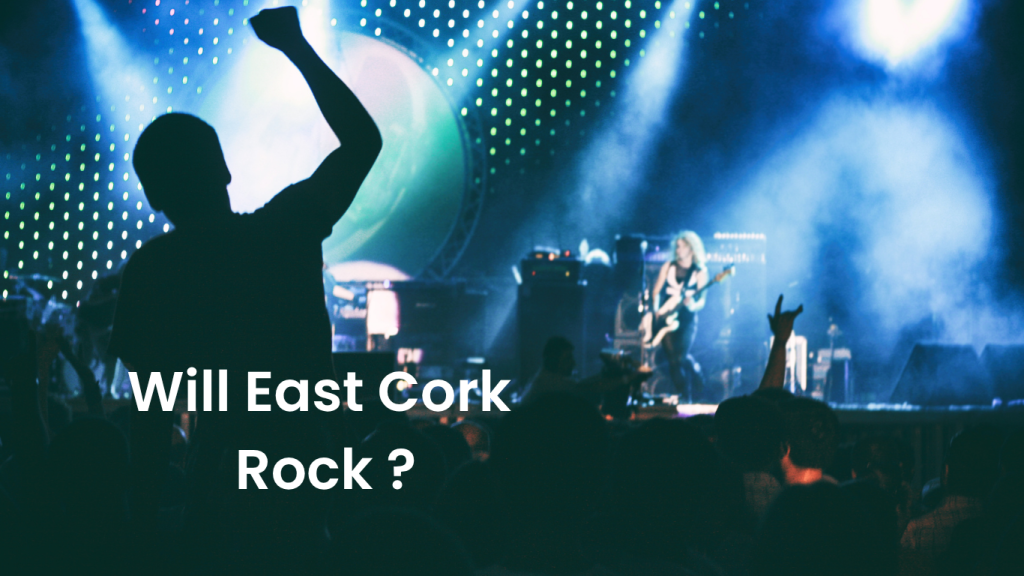
On July 4th, Backline Live is testing a simple question: can original live music work outside the usual city-centre venues?
The test case is Midleton.
Four local acts. Four different sounds. One night. A 190-capacity community venue with professional sound, lighting, and room to move.
The Experiment
The line-up brings together Erin & The Lens, On Paper Wings, Ruined Family Vacation and Stephen Murphy, with music ranging across blues rock, rap rock, pop punk and alternative rock. Some covers will appear in the setlists, but original music is very much part of the night.
That matters.
Original music can be a harder sell in venues built around familiar songs, background atmosphere and keeping drinkers comfortable. That is not a criticism as much as a reality. Pubs have their own pressures. Venues have their own models. Audiences often want to know what they are getting before they leave the house.
But if every live music space only rewards what people already know, where exactly are new scenes supposed to grow?
That is part of what Backline Live is trying to find out.
Every established music scene was built by people turning up before the names were familiar.
When people hear that a gig is happening in Cork, they often assume it means Cork city. One of the recognised venues. One of the usual rooms. One of the places already marked on the music map.
But this gig is happening in Midleton, a large town around twenty kilometres from Cork city, and that choice is not accidental.
Why Midleton?
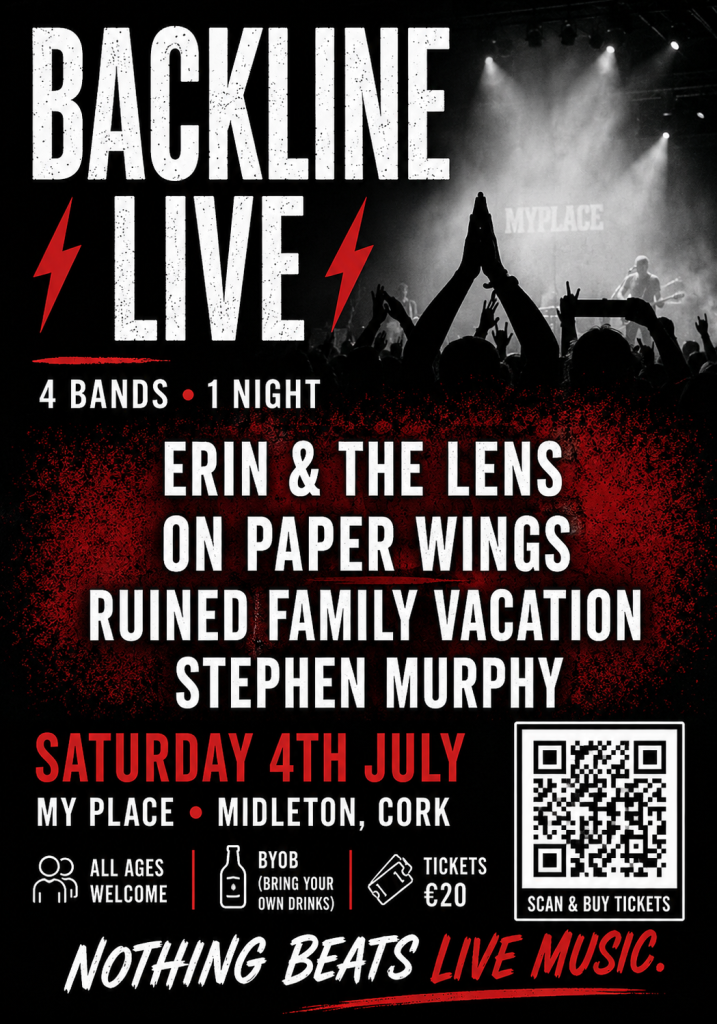
Towns like Midleton have advantages that are easy to overlook. There is parking. There is space. There are people. There are community venues with lower costs and bigger rooms than many small city venues can offer. My Place in Midleton has a main hall capacity of 190 standing, a professional sound and lighting system, and an in-house sound engineer.
That is not nothing.
It opens up a different possibility: live music nights that are bigger than a corner-of-the-pub session, but not dependent on the city-centre venue circuit.
Outside the usual music map
Across Ireland, plenty of people love live music but do not live within easy reach of the established music scenes. If you are in West Cork, rural Clare, East Cork, North Cork, or any large town outside a major city, your options for live music are often limited. There may be pub sessions. There may be cover bands. There may be tribute acts. But original rock, alternative, punk, blues, heavy music, rap rock, or mixed-genre nights are far less common.
That does not mean the audience is not there.
It may mean the gigs are not reaching them.
If the huge appetite for major live rock shows tells us anything, it is that guitar-driven music is not dead. Hard rock is not dead. Live bands are not dead. Intergenerational audiences are still showing up for music that has weight, volume, emotion and physical force.
The question is whether that appetite only exists when a famous name is attached, or whether people are willing to take a chance on local artists before the wider world has approved them.
That is the leap every local scene needs people to make.
Because every established music scene was built by people turning up before the names were familiar. Before the algorithm. Before the press coverage. Before someone else told them it was worth seeing.
Live music is not the same as streaming music into your ear while you do the shopping.
Why live music still matters
Live music is physical. You feel it in your chest, your nerves, your feet, your throat when you shout back at the stage. When people talk about the first big gig they ever went to, they nearly always remember it. Not as a neat list of songs, but as a feeling. The lights. The noise. The crowd. The shock of being in a room where everyone is experiencing something at the same time.
That collective experience is hard to replicate anywhere else.
And smaller gigs can carry that same charge.
Showing up before everyone else catches on
Sometimes when I am putting up posters, people say, “I don’t know those bands. Why would I go?”
It is a fair question.
The answer is: because that is how scenes are built.
You go because you might discover something. You go because local musicians need rooms, not just online likes. You go because a night of live music does not have to be famous to be memorable. You go because the next great band you love will not arrive fully formed with a blue tick and a press campaign. Someone has to hear them first.
What we’re testing
Backline Live is not pretending to know all the answers. This first night is an experiment between bands, audiences and community. It is a test of whether larger towns can hold bigger live music nights. It is a test of whether mixed-genre line-ups can bring different audiences into the same room. It is a test of whether original music can be given space outside the usual pathways.
I have seen the artists who are performing on July 4th. There is no shortage of musicianship, energy or talent.
Are they viral?
No. Not yet.
Will they put on a night people remember?
I think so.
And maybe that is where every live scene starts: not with certainty, but with a room, a stage, a few brave bands, and enough people willing to show up before everyone else catches on.